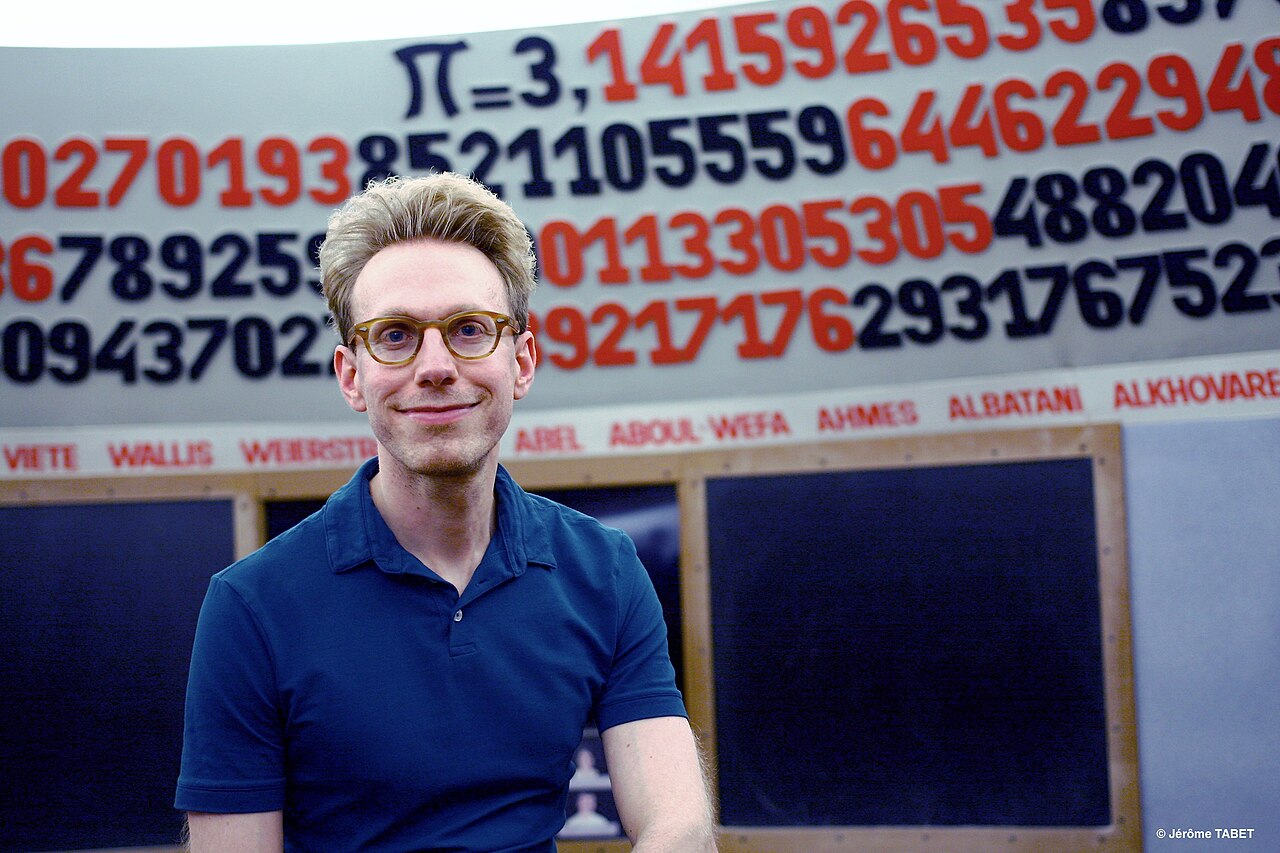
Autiste, synesthète, polyglotte : Daniel Tammet perçoit les nombres comme des formes et des couleurs. Portrait d'un esprit hors norme.
Une enfance marquée par l'épilepsie
Daniel Tammet — né Daniel Paul Corney le 31 janvier 1979 à Barking, dans l'est de Londres — grandit dans une famille modeste, aîné d'une fratrie de neuf enfants. Dès son plus jeune âge, on lui diagnostique une épilepsie et il connaît plusieurs crises. C'est après l'une d'elles, vers l'âge de quatre ans, qu'il remarque que les nombres ne lui apparaissent pas comme de simples chiffres : ils ont une forme, une couleur, une texture.
Le diagnostic d'autisme (syndrome d'Asperger) arrivera plus tard, à l'âge adulte — un parcours de diagnostic tardif que partagent de nombreuses personnes autistes de sa génération.
Le monde vu à travers les nombres
Ce phénomène s'appelle la synesthésie : un croisement des sens qui fait que Daniel Tammet perçoit chaque nombre jusqu'à 10 000 avec sa propre couleur, sa forme, parfois son mouvement. Voici comment il décrit lui-même quelques-uns d'entre eux :
« Le nombre 11 est amical et le 5 est bruyant, alors que le 4 est timide et discret — c'est mon préféré, peut-être parce qu'il me rappelle moi-même. »
— Daniel Tammet, Neurology Now / Brain & Life
Daniel Tammet explique sa perception synesthésique dans sa conférence TED "Different ways of knowing" (2011).
Un record d'Europe, chiffre par chiffre
C'est cette capacité à « voir » les nombres qui lui permet, le 14 mars 2004 au Museum of the History of Science d'Oxford, de réciter 22 514 décimales de π de mémoire, sans erreur, en 5 heures 9 minutes et 24 secondes — un nouveau record d'Europe à l'époque. Pour lui, chaque suite de chiffres se déroule comme un paysage qu'il n'a qu'à observer, plutôt qu'un calcul à effectuer.
Onze langues, dont une apprise en une semaine
Daniel Tammet parle onze langues. Pour un documentaire télévisé primé (diffusé sous le titre Brainman ou The Boy with the Incredible Brain selon les pays, vu dans plus de 40 pays), il a appris l'islandais en une semaine, avant de tenir une conversation en direct à la télévision islandaise. Enfant, il évoque un sentiment d'identification très concret aux nombres eux-mêmes :
« Quand j'étais enfant, je me sentais beaucoup comme le nombre 24. »
— Daniel Tammet, Brut
D'un succès littéraire à une reconnaissance académique
Son livre Je suis né un jour bleu (2006) devient un immense succès : best-seller du Sunday Times et du New York Times, il se vend à plus de 500 000 exemplaires dans le monde et sera traduit en 30 langues. Daniel Tammet publiera au total dix livres, avec des textes parus dans Esquire, The Guardian ou encore The Times Literary Supplement.
Sa reconnaissance dépasse largement le cercle littéraire : en 2012, il est élu membre de la Royal Society of Arts ; en 2023, l'Open University — son ancienne université — lui décerne un doctorat honorifique.
Ce que son histoire nous apprend
Son parcours rappelle qu'un cerveau qui fonctionne différemment ne perçoit pas un monde appauvri, mais souvent un monde plus riche que la moyenne, à sa manière : plus de couleurs, plus de textures, plus de sens là où d'autres ne voient qu'un chiffre.
Questions fréquentes
Oui. Il continue d'écrire — dix livres à ce jour — et vit aujourd'hui en France.
Je suis né un jour bleu (2006), best-seller international vendu à plus de 500 000 exemplaires.
Chaque cerveau autiste fonctionne à sa façon — Daniel Tammet en est un exemple spectaculaire, mais chaque parcours mérite d'être regardé avec la même curiosité.
Sources : Neurology Now/Brain & Life (AAN) ; Brut Media ; Simon & Schuster ; Goodreads ; Andrew Lownie Literary Agency ; Wikipédia ; danieltammet.net.
— ◆ —
Chaque don compte
Votre soutien permet à l'association de poursuivre son accompagnement auprès des personnes autistes et de leurs familles.
Nous SoutenirVous aimerez aussi
Bénévole autisme : rejoignez notre campagne des 30 ans
Le Silence des Justes fête ses 30 ans le 21 octobre 2026. Pour faire de cette date un moment fort, nous recrutons des bénévoles — tractage, présence en ligne, appels. Voici comment nous rejoindre. Bénévolat

Comment expliquer l’autisme aux enfants ?
Expliquer l’autisme aux enfants peut aider à développer empathie, compréhension et respect dès le plus jeune âge. Cet article propose des approches simples et adaptées pour parler du spectre autistique avec les enfants, en utilisant des exemples concrets et un langage accessible afin de favoriser une attitude bienveillante et inclusive envers les personnes autistes.

Comment soutenir un ami ou un membre de la famille qui est autiste
Soutenir un ami ou un membre de la famille qui est autiste implique d’adopter une écoute attentive, une communication claire et beaucoup de bienveillance. L’article donne des conseils concrets pour comprendre les besoins spécifiques, respecter les rythmes et préférences, et offrir un accompagnement empathique qui favorise le confort, la confiance et le bien‑être au quotidien.