Nonverbal until age 5, now able to draw an entire city after a single helicopter flyover: the story of Stephen Wiltshire.
Silence, Then a Single Word: "Paper"
Stephen Wiltshire was born on April 24, 1974, in London, to West Indian parents. Diagnosed with autism at age 3, he didn't speak a single word until he was 5. During a school trip to Queensmill School — a London school for autistic children — he finally broke his silence: his very first word was "paper." Asked again by his teacher, he added a second word: "pen."
It was at Queensmill School that his teachers noticed his one true interest: drawing. First animals, then cars — he would go on to develop an encyclopedic knowledge of American automobiles that he retains to this day. Around age 7, his fascination shifted to London's iconic buildings. After being shown a book of photographs depicting earthquake devastation, he even began imagining and drawing entirely fictional cities, already showing an impressive attention to architectural detail.
His teachers had made a simple bet: if drawing was the one thing that seemed to genuinely captivate Stephen, perhaps it could also become his gateway into speech. The bet paid off — it was precisely by encouraging him to draw that he gradually began to develop language.
A Book Published at 13, Then Oliver Sacks
His first major media exposure dates back to February 1987: the BBC devoted a documentary to him, The Foolish Wise Ones, about savant syndrome — a term describing, in some autistic people or those with a developmental disorder, an exceptional ability in one specific area (memory, calculation, music, drawing), often far beyond what their general functioning would suggest. That day, the cameras filmed him drawing St. Pancras Station in London, a building he had visited for the very first time just hours earlier. Calls and letters poured into the BBC — viewers already wanting to buy his artwork.
One detail speaks to just how quickly recognition followed: by age 8, one of his pieces was already owned by the British Prime Minister of the time.
His talent quickly drew wider media attention: by age 13, Stephen Wiltshire had published his first book of drawings. Television programs and documentaries about "savants" took an interest in him throughout his teenage years.
During a trip to New York for an interview, he met the renowned neurologist Oliver Sacks — and, after a single glance, drew a faithful reproduction of his house. Sacks would later write the foreword to Wiltshire's second book, with a line that has since become famous: "The combination of great abilities with great disabilities presents an extraordinary paradox: how can such opposites live side by side?"
The Method: One Helicopter Ride, Then Memory Does the Rest
A 1998 graduate of the City & Guilds of London Art School, Stephen Wiltshire refined his artistic signature: fly over a city just once by helicopter, then reproduce it entirely from memory on a canvas that can stretch several meters long — streets, buildings, bridges, down to the exact number of windows on each façade.
His first large-scale panorama of this kind dates back to 1989, during a trip to Venice. London, Rome, Madrid, Frankfurt, Dubai, Jerusalem, Hong Kong, and Tokyo followed. In 2009, after just a 20-minute flight over Manhattan, he produced a panorama of New York nearly 6 meters long. In 2010, invited by Autism Spectrum Australia to mark Autism Month, he reproduced Sydney. In 2014, he recreated Singapore over 5 days, in front of 150,000 onlookers — and, more recently, Mexico City, on a 4-meter canvas.
His working method has its own quirk too: Stephen Wiltshire typically draws while listening to music, which he describes as a valuable aid to concentration.
National Geographic follows Stephen Wiltshire as he draws Mexico City from memory, on a 4-meter canvas.
Rare Visibility for a Black Autistic Artist
A point often raised by researchers who study his career: the public figures associated with autism remain, even today, overwhelmingly white in the media — even though children from ethnic minorities have historically been diagnosed less often, despite comparable needs.
Stephen Wiltshire's career, as an artist of West Indian descent, is concrete proof that talent and public recognition around autism aren't confined to any single background — a useful reminder in a field where representation still tends to be far too homogeneous.
Official Recognition, All the Way to Buckingham Palace
In 2006, Stephen Wiltshire was made a Member of the Order of the British Empire (MBE) for services to art — one of the UK's highest honors. Today, his commissions carry a waiting list of 4 to 8 months, and videos of him drawing live regularly go viral.
He now has his own permanent gallery in the Royal Opera Arcade in London, where his original works are displayed and sold.
He's sometimes nicknamed "the Human Camera" — a name that comes directly from his ability to recreate an entire scene after a single glance, without ever taking notes or photos during the flight itself.
Frequently Asked Questions
At age 3. He didn't speak his first word ("paper") until age 5.
He typically flies over the city just once by helicopter, then reproduces the scene from memory over several days, with extremely precise architectural detail.
At his permanent gallery in the Royal Opera Arcade, London, or on his official website, where several of his works are featured and available for purchase.
From a child without a single word to an artist whose commissions book out months in advance — proof that an early silence says nothing about what might follow.
Stephen Wiltshire's story is a reminder that a diagnosis is never a limit set in stone — it's a key to understanding yourself, one that everyone can turn into something different, in their own way.
Further Reading
- His official website and gallery — his original works, featured and available for purchase
- His Wikipedia entry — a full timeline of his artistic career
Sources: National Geographic; Wikipedia, "Stephen Wiltshire"; The Art of Autism; Escape Into Life; stephenwiltshireart.com; stephenwiltshire.co.uk.
— ◆ —
Every donation matters
Your support helps the association continue its work with autistic people and their families.
Support UsYou May Also Like
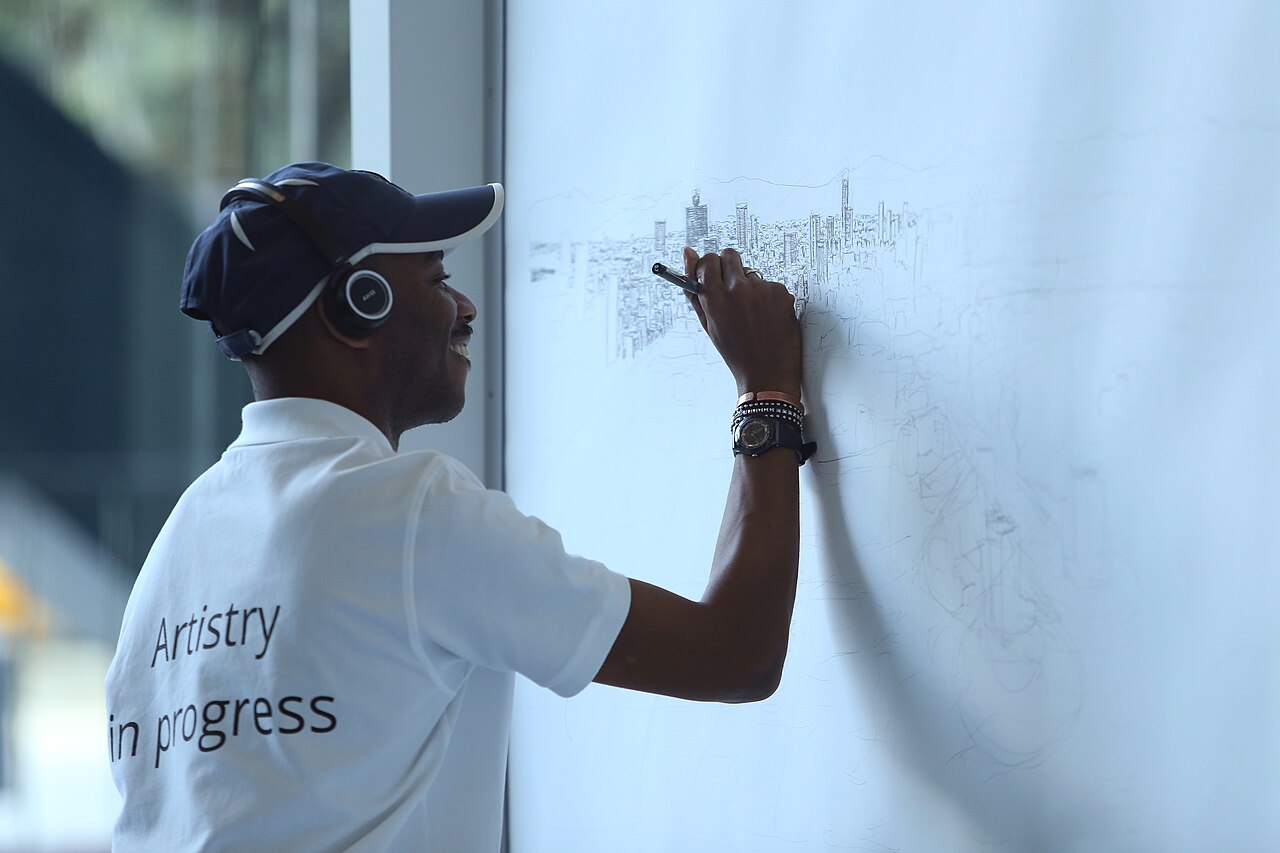
Stephen Wiltshire: The Man Who Draws Entire Cities From Memory
He didn't speak a single word until age 5 — and his first word was "paper." Today, Stephen Wiltshire boards a helicopter, flies over an unfamiliar city for twenty minutes, then redraws the entire skyline from memory, street by street, window by window. Here's how this British artist became known as "the human camera."
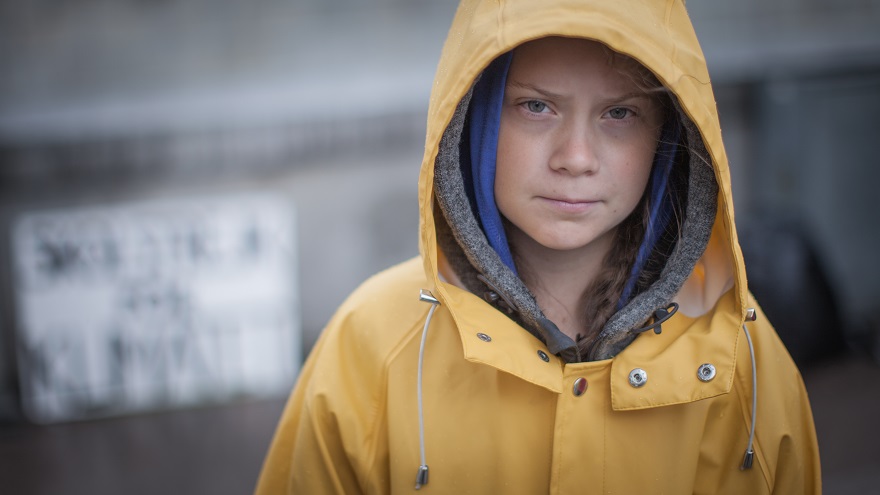
Greta Thunberg: When Asperger's Becomes a "Superpower"
At age 11, Greta Thunberg stopped eating and stopped speaking for several months. What followed that silence went on to change how millions of people talk about both climate change and autism. Here's how a diagnosis, received in real pain, became — in her own words — a "superpower."

Precious moments and learning
In this article, Le Silence des Justes highlights how everyday moments can become genuine learning opportunities. Through shared experiences, families discover that relaxation, interaction and caring support foster the development of skills. These precious moments, seemingly simple, play an essential role in the fulfilment and progress of children with autism.