

Les défis rencontrés par les personnes atteintes d’autisme lorsqu’elles cherchent un emploi et met en lumière leurs réussites.
Cet article explore les défis rencontrés par les personnes atteintes d'autisme lorsqu'elles cherchent un emploi et met en lumière leurs réussites. Nous aborderons également des suggestions pratiques pour surmonter ces défis et créer un environnement de travail inclusif.
L'autisme peut poser des obstacles pour trouver et maintenir un emploi. Les difficultés de communication, l'incapacité à lire les signaux sociaux et les comportements répétitifs peuvent avoir un impact sur la participation au processus de recrutement et l'intégration dans le milieu professionnel. Cependant, avec les bonnes adaptations, ces talents uniques peuvent être valorisés et exploités.
Il est important de reconnaître que chaque personne autiste est unique. En comprenant leurs forces, leurs talents et leurs compétences spécifiques, les employeurs peuvent adapter leurs méthodes de recrutement et de gestion pour favoriser leur succès professionnel. Des ajustements raisonnables tels que des horaires flexibles, des supports visuels ou des modifications de l'environnement de travail peuvent permettre aux personnes autistes de s'épanouir dans leur carrière.
Afin de créer une atmosphère inclusive, il est essentiel de sensibiliser les collègues à l'autisme et aux différences neurologiques. Une formation adéquate peut encourager la compréhension mutuelle, réduire les stéréotypes et promouvoir une culture du respect et de l'inclusion. La création de réseaux professionnels dédiés aux personnes autistes peut également offrir des opportunités d'échange d'expériences et d'apprentissage collaboratif.
En conclusion, il est crucial de reconnaître les défis auxquels sont confrontées les personnes autistes sur le marché du travail tout en célébrant leurs réussites. En adoptant des mesures d'adaptation et en favorisant l'inclusion, nous pouvons créer un environnement professionnel où tous les individus peuvent pleinement utiliser leurs compétences et contribuer de manière significative. Les défis de l'emploi pour les personnes autistes ne doivent pas être confondus avec "Trouver Charlie!"
Difficultés rencontrées par les personnes autistes pour trouver un emploi
Pour mieux aider les personnes atteintes d'autisme à trouver un emploi, il est important de comprendre les défis auxquels elles font face. Parmi ces difficultés, il y a le manque de sensibilisation et de compréhension de l'autisme sur le lieu de travail, ainsi que les difficultés à interagir socialement et à communiquer. Dans les sections suivantes, nous aborderons ces problèmes et proposerons des solutions adaptées.
Manque de compréhension et de sensibilisation à l'autisme sur le lieu de travail
Le manque de compréhension et de sensibilisation à l'autisme sur le lieu de travail peut poser des difficultés aux personnes atteintes d'autisme lors de leur recherche d'emploi. Les employeurs et les collègues peuvent ne pas être conscients des besoins spécifiques de ces personnes, ce qui peut entraîner une exclusion involontaire ou une mauvaise gestion des situations liées à l'autisme. Cette méconnaissance peut avoir un impact négatif sur les processus de recrutement, la communication et les opportunités de développement professionnel pour les individus autistes.
Pour créer un environnement inclusif sur le lieu de travail, il est essentiel de développer une meilleure compréhension de l'autisme. Cela pourrait impliquer la formation des employeurs et des collègues sur les caractéristiques et les besoins spécifiques des personnes autistes, ainsi que la mise en place de mesures d'adaptation raisonnables pour répondre à leurs besoins. Il est également important de promouvoir une culture de tolérance et d'inclusion au sein de l'entreprise afin de favoriser la pleine participation et le développement professionnel des personnes autistes.
De plus, il est crucial que les entreprises reconnaissent les talents et les compétences uniques que peuvent apporter les individus autistes. Malgré leurs différences neurologiques, ces personnes peuvent avoir des aptitudes exceptionnelles dans certains domaines tels que l'analyse statistique, la résolution de problèmes complexes ou encore l'attention aux détails. En redéfinissant la perception traditionnelle du talent, les entreprises peuvent bénéficier des contributions offertes par les individus autistes et promouvoir la diversité au sein de leurs équipes.
En résumé, pour surmonter les défis auxquels sont confrontées les personnes atteintes d'autisme dans leur recherche d'emploi, il est essentiel de favoriser une meilleure compréhension et sensibilisation à l'autisme sur le lieu de travail. En créant un environnement inclusif, en offrant des mesures d'adaptation raisonnables et en valorisant les compétences uniques des personnes autistes, nous pouvons créer des opportunités professionnelles équitables pour tous.
Lorsque vous travaillez avec des collègues ou des employés atteints d'autisme, il est important de communiquer clairement et ouvertement. Soyez sensible à leurs besoins spécifiques et soyez prêt à adapter votre approche de travail pour favoriser une collaboration efficace. Il est intéressant de constater que ce sont souvent les personnes "neurotypiques" qui semblent être socialement maladroites sur le lieu de travail, alors que les personnes atteintes d'autisme rencontrent des difficultés à trouver un emploi !
Difficulté à gérer les interactions sociales et la communication
Les personnes atteintes d'autisme sont confrontées à un défi majeur lorsqu'il s'agit de trouver un emploi, à savoir la difficulté à naviguer dans les interactions sociales et la communication. Elles peuvent avoir du mal à comprendre les signaux sociaux non verbaux, à lire les expressions faciales et à maintenir des conversations fluides. Ces difficultés peuvent entraîner une mauvaise interprétation des attentes sociales ou une incapacité à y répondre efficacement, ce qui peut nuire à leur capacité d'obtenir et de garder un emploi.
De plus, les problèmes de communication peuvent entraîner une mauvaise compréhension des instructions données par les employeurs, ce qui peut avoir un impact sur la performance au travail. Les personnes atteintes d'autisme peuvent avoir du mal à exprimer leurs besoins et leurs préoccupations, ce qui rend difficile pour elles de demander de l'aide ou d'obtenir des ajustements raisonnables sur le lieu de travail.
Un autre défi unique auquel les personnes atteintes d'autisme sont confrontées lorsqu'elles cherchent un emploi est leur sensibilité élevée aux stimuli sensoriels. Les environnements de travail bruyants ou lumineux peuvent être extrêmement perturbants pour elles, ce qui entraîne une augmentation des distractions et une diminution de leur concentration et de leurs performances.
Il est important que les employeurs tiennent compte de ces défis spécifiques auxquels sont confrontées les personnes atteintes d'autisme lorsqu'ils envisagent d'embaucher ou de faire des ajustements raisonnables pour assurer l'inclusion sur le lieu de travail.
Selon l'Association nationale américaine pour l'autisme (ANAA), malgré leur potentiel et leurs compétences, seulement 32% des jeunes adultes atteints d'autisme ont un emploi rémunéré. Cela souligne la nécessité d'une sensibilisation accrue et de mesures visant à faciliter l'emploi des personnes atteintes d'autisme.
Que la recherche d'emploi pour les personnes atteintes d'autisme soit aussi simple que la compréhension de l'ironie.
Stratégies pour surmonter ces défis
Dans le domaine du travail, il est possible de mettre en place des stratégies pour surmonter ces défis. Cela comprend la sensibilisation et la formation à l'autisme sur le lieu de travail, ainsi que la mise en œuvre de mesures d'aménagement raisonnables et de systèmes de soutien. Ces solutions visent à créer un environnement inclusif, favorisant la réussite professionnelle des personnes autistes.
Sensibilisation et formation à l'autisme sur le lieu de travail
La promotion de la sensibilisation à l'autisme et de la formation en milieu de travail est essentielle pour favoriser l'inclusion et le soutien des personnes autistes. Pour atteindre cet objectif, il est crucial de dispenser une formation régulière et interactive sur l'autisme aux employés. Cette formation devrait inclure des informations sur les signes et les traits caractéristiques de l'autisme, ainsi que des conseils pratiques pour faciliter la communication et adapter l'environnement de travail.
De plus, il est important d'établir un dialogue ouvert avec les employés autistes, en encourageant leur participation active lorsqu'il s'agit de définir leurs besoins spécifiques. En outre, il convient de souligner que chaque entreprise doit adopter une approche individualisée lorsqu'il s'agit d'offrir un soutien aux employés autistes. Les besoins varient d'une personne à l'autre, il est donc essentiel d'adapter les stratégies et les aménagements en fonction des préférences et des capacités individuelles.
En conclusion, la sensibilisation à l'autisme et la formation en milieu de travail sont cruciales pour favoriser l'inclusion et le soutien des personnes autistes. En adoptant une approche individualisée, en dispensant une formation régulière et interactive, en créant un dialogue ouvert et en offrant des aménagements raisonnables, les entreprises peuvent créer un environnement inclusif où les employés autistes peuvent s'épanouir professionnellement. Cependant, il est important d'avoir un plan solide en place lorsqu'il s'agit de mettre en place des aménagements raisonnables et des systèmes de soutien, afin d'éviter tout chaos ou complications administratives.
Mise en place d'aménagements raisonnables et de systèmes de soutien
La mise en œuvre d'ajustements raisonnables et de systèmes de soutien est essentielle pour surmonter ces défis. Ces mesures garantissent un accès équitable aux opportunités et aux ressources nécessaires à la réussite de toutes les personnes, quelles que soient leurs différences.
Pour cela, il est important tout d'abord d'identifier les besoins individuels. En comprenant les besoins uniques de chaque individu, il devient possible de mettre en place des ajustements adaptés à leurs spécificités.
Il est également crucial de promouvoir la sensibilisation. Informer et sensibiliser les membres de l'organisation sur les avantages et les exigences des ajustements raisonnables permet de créer un environnement inclusif.
De plus, il est nécessaire de fournir un soutien continu aux personnes concernées. Mettre en place des systèmes de soutien robustes, tels que la formation supplémentaire ou le mentoring, contribue à renforcer leur autonomie et leur confiance.
Il est également important d'évaluer régulièrement l'efficacité de ces mesures. Suivre et évaluer l'impact des ajustements mis en place permet d'apporter les modifications nécessaires pour assurer une réelle inclusion.
Il convient également de reconnaître que chaque individu a une contribution unique à apporter, indépendamment de leurs différences. En intégrant activement ces perspectives diversifiées dans nos processus décisionnels et notre culture organisationnelle, nous créons un environnement plus dynamique et innovant.
Ne manquez pas cette opportunité d'implémenter des mesures concrètes pour promouvoir l'inclusion et le bien-être de tous. Ensemble, nous pouvons surmonter ces défis et bâtir une société plus équitable et inclusive.
Malgré les défis, ces succès prouvent que travailler avec l'autisme offre une colocation de talents exceptionnels !
Célébrer les réussites des personnes autistes sur le lieu de travail
Nous présenterons des exemples d'expériences professionnelles réussies pour célébrer les succès des personnes atteintes d'autisme sur le lieu de travail. En mettant en avant la diversité neurologique au sein de la main-d'œuvre, nous mettrons également en lumière les nombreux avantages que cela apporte. Découvrez comment ces histoires inspirantes et ces avantages favorisent l'inclusion et créent des opportunités pour tous.
Présenter des exemples d'expériences professionnelles réussies
Parlons maintenant des histoires inspirantes de réussite professionnelle pour les individus autistes. Ce sujet met en avant des exemples d'expériences d'emploi qui se sont soldées par un succès. Découvrons comment ces personnes ont surmonté les obstacles et ont réussi à s'épanouir dans leur carrière. Les récits remarquables de ces individus sont centrés sur le talent et la persévérance.
Voici les différentes informations que vous allez trouver :
| Comment l'emploi peut être une source de fierté et de satisfaction pour les individus autistes. |
|---|
| Les différentes stratégies mises en place par les employeurs pour soutenir le succès professionnel des personnes autistes. |
| Les témoignages inspirants des individus eux-mêmes, racontant comment ils ont trouvé leur place sur le marché du travail. |
| L'impact positif que la diversité neurologique peut avoir au sein des entreprises et des équipes. |
| Comment certaines entreprises favorisent un environnement inclusif pour permettre aux individus autistes de s'épanouir professionnellement. |
| Les défis auxquels sont confrontés ces individus ainsi que les ressources disponibles pour les soutenir tout au long de leur parcours professionnel. |
Ces histoires uniques offrent une perspective inspirante sur le potentiel indéniable des individus autistes dans le monde du travail. Ne manquez pas l'occasion d'en apprendre davantage sur ces parcours extraordinaires et découvrez comment vous pouvez contribuer à créer un environnement professionnel accessible et inclusif.
Laissez la neurodiversité briller sur le lieu de travail - des talents différents, des succès similaires!
Mettre en évidence les avantages de la neurodiversité sur le marché du travail
Les avantages de la neurodiversité sur le lieu de travail sont mis en évidence. Les employés présentant des différences neurologiques apportent une perspective unique et une pensée divergente, ce qui favorise l'innovation et la résolution créative de problèmes. Cette diversité cognitive améliore également l'environnement de travail en encourageant l'empathie, la compréhension et l'inclusion.
La valorisation et l'intégration des talents neurodivergents peuvent conduire à des bénéfices significatifs pour les entreprises. Une étude récente a montré que les individus avec autisme, par exemple, possèdent souvent des compétences spécialisées dans des domaines tels que l'analyse de données et la programmation informatique. Lorsqu'ils sont placés dans un environnement favorable, ces employés peuvent exceller dans leurs rôles et contribuer de manière stratégique à la réussite de l'entreprise.
Il est important de noter que chaque individu avec un profil neurodivergent est unique et apporte des compétences spécifiques à la table. Certains peuvent avoir une excellente attention aux détails ou une forte capacité d'introspection, tandis que d'autres peuvent être particulièrement créatifs ou dotés d'une mémoire exceptionnelle. En offrant un soutien adapté, comme des aménagements raisonnables ou un mentorat individualisé, les entreprises peuvent optimiser les performances et le bien-être de leurs employés neurodiversifiés.
En conclusion, il est essentiel d'apprécier les avantages de la neurodiversité sur le lieu de travail. En incluant activement ces talents différents, les entreprises peuvent stimuler l'innovation, promouvoir l'empathie et créer un environnement inclusif où chaque individu peut contribuer pleinement et réussir.
Pour ceux qui pensent que les personnes autistes ne peuvent pas réussir dans le monde du travail, voici une réponse claire : elles sont aussi talentueuses que votre GPS qui vous fait prendre la mauvaise direction à chaque fois.
Conclusion
Les personnes atteintes d'autisme peuvent surmonter les défis liés à l'emploi et célébrer leurs réussites. Cependant, pour y parvenir, il est important de créer un environnement inclusif et de fournir des ressources de soutien adaptées aux besoins individuels. En offrant des opportunités d'emploi inclusives et en sensibilisant les employeurs aux talents uniques des personnes autistes, nous pouvons favoriser leur épanouissement professionnel.
Il est essentiel de comprendre que chaque personne autiste a des besoins différents lorsqu'il s'agit d'autisme et d'emploi. Les adaptations raisonnables, telles que la flexibilité des horaires de travail ou l'aménagement du poste, peuvent être cruciales pour permettre aux individus autistes de s'épanouir au travail. Sensibiliser les employés et les collègues à l'autisme peut également encourager une meilleure compréhension mutuelle et une collaboration plus efficace.
Il est important de souligner que l'autisme n'est pas une limitation en soi lorsqu'il s'agit de trouver un emploi. De nombreuses personnes autistes possèdent des compétences exceptionnelles dans des domaines spécifiques tels que l'informatique, les mathématiques ou la créativité artistique. En reconnaissant ces talents uniques et en offrant des opportunités équitables d'accès à l'emploi, nous pouvons favoriser le plein potentiel professionnel des personnes autistes.
Une histoire inspirante vient illustrer cette réalité. Sarah, une jeune femme autiste passionnée d'informatique, a eu du mal à trouver un emploi dans son domaine malgré ses compétences impressionnantes. Cependant, grâce à une entreprise qui avait mis en place des pratiques d'embauche inclusives et un environnement de travail favorable, Sarah a été embauchée en tant que développeuse logiciel. Aujourd'hui, elle est l'une des meilleures employées de l'entreprise, apportant non seulement ses compétences techniques, mais aussi sa créativité et son sens de l'innovation.
En conclusion, l'autisme ne doit pas être considéré comme un obstacle à l'emploi. En créant des opportunités inclusives et en reconnaissant les talents uniques des personnes autistes, nous pouvons surmonter les défis et célébrer leurs réussites professionnelles. Il est essentiel de fournir un soutien adapté aux besoins individuels afin de favoriser l'épanouissement professionnel des personnes autistes et de bénéficier de leurs compétences exceptionnelles dans le monde du travail.
Questions fréquemment posées
Q: Qu'est-ce que l'autisme ?
R: L'autisme est un trouble du développement qui affecte la capacité d'une personne à communiquer et à interagir avec les autres. Les personnes atteintes d'autisme peuvent avoir des difficultés à comprendre les signaux sociaux, les expressions faciales et les nuances verbales.
Q: Quels sont les défis auxquels sont confrontées les personnes autistes sur le marché de l'emploi ?
R: Les personnes autistes peuvent rencontrer des difficultés à trouver et à conserver un travail. Parfois, il est difficile pour eux de passer des entretiens d'embauche car ils ont des difficultés à communiquer leurs compétences et leurs expériences. Ils peuvent également avoir besoin d'adaptations spéciales et de soutien sur le lieu de travail.
Q: Quelles mesures peuvent être prises pour aider les personnes autistes à trouver du travail et à réussir dans leur carrière ?
R: Les employeurs peuvent prendre des mesures pour assurer l'inclusion des personnes autistes sur le lieu de travail, telles que fournir un environnement calme et structuré, offrir du temps supplémentaire pour les tâches et fournir un soutien personnalisé. Les programmes de formation professionnelle peuvent également aider les personnes autistes à développer leurs compétences et à préparer leur transition vers le marché du travail.
Q: Les personnes autistes peuvent-elles occuper des postes de direction ?
R: Absolument ! Les personnes autistes sont souvent très talentueuses et ont des compétences exceptionnelles dans des domaines tels que l'analyse, la résolution de problèmes et la créativité. Avec le soutien approprié, elles peuvent atteindre des postes de direction dans leur carrière.
Q: Les employeurs peuvent-ils bénéficier d'avoir des personnes autistes dans leur entreprise ?
R: Oui ! Les personnes autistes apportent souvent des perspectives uniques et une pensée créative à leur travail. Elles peuvent également être très concentrées et minutieuses dans leur travail, ce qui peut être un atout précieux pour de nombreuses entreprises.
Q: Comment puis-je en apprendre davantage sur les initiatives d'emploi pour les personnes autistes dans ma région ?
R: Vous pouvez contacter des associations de soutien pour les personnes autistes ou des centres de recherche sur l'autisme dans votre région. Le gouvernement local peut également avoir des programmes d'emploi pour les personnes atteintes d'autisme. Les réseaux sociaux et les sites web spécialisés peuvent également être une excellente ressource pour trouver plus d'informations sur ce sujet.
Chaque don compte
Votre soutien permet à l'association de poursuivre son accompagnement auprès des personnes autistes et de leurs familles.
Nous SoutenirVous aimerez aussi

L’impact de l’autisme sur les frères et sœurs
L’impact de l’autisme sur les frères et sœurs met en lumière les émotions, responsabilités et dynamiques familiales uniques vécues par ces enfants. Il souligne comment la présence d’un frère ou d’une sœur autiste peut influencer le développement, les relations et le bien‑être des fratries, tout en offrant des pistes pour mieux comprendre, soutenir et valoriser leur rôle au sein de la famille.
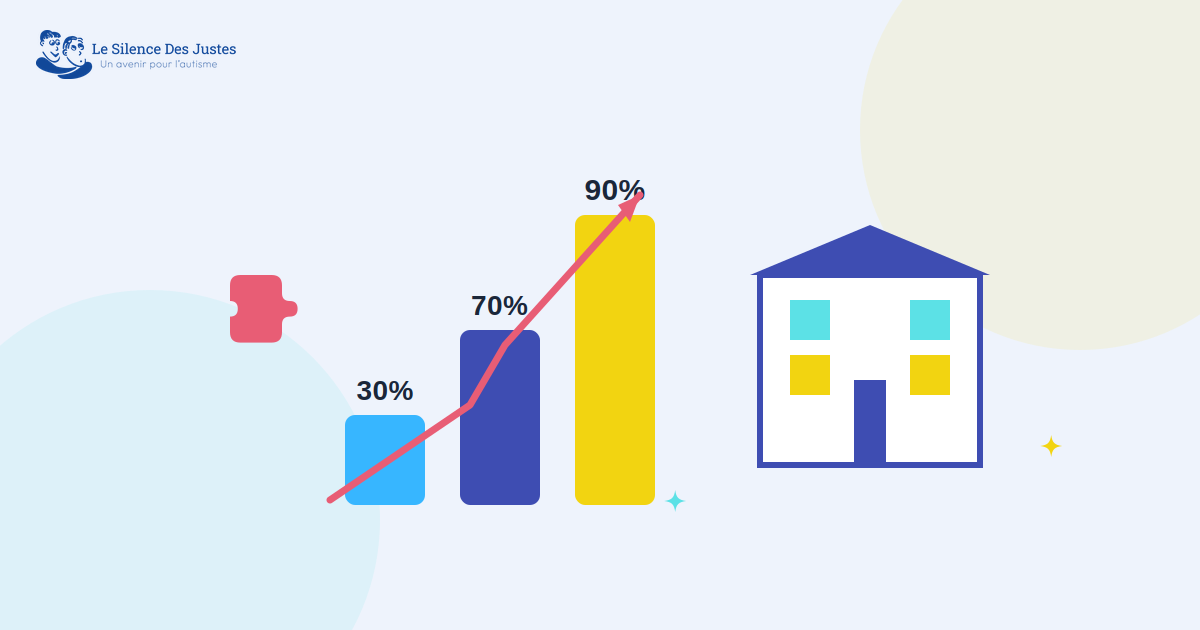
Scolarisation à l'IME : de 30% à 90% en deux ans
Dans un <a href ="/actualites/autisme-et-scolarisation-en-france-les-chiffres-de-la-rentree" target_blank> précédent article</a>, on parlait de chiffres nationaux — dispositifs, réformes, tensions. En voici un qui vient de l'intérieur, et qui permet de mesurer ce que ces politiques donnent, une fois appliquées concrètement : à l'IME du Silence des Justes, le taux d'enfants scolarisés en milieu ordinaire est passé de 30% à 90% en deux ans. Voici comment, et ce que ça représente à l'échelle du pays.
Ailleurs en France : l'autisme en Île-de-France
Premier article d'une nouvelle série : après avoir comparé l'accompagnement de l'autisme entre pays, on tourne maintenant le regard vers l'intérieur — région par région, en commençant par l'Île-de-France, le territoire historique du Silence des Justes. Contrairement à la série internationale, la loi est ici rigoureusement identique partout en France. Ce qui change, en revanche, c'est le temps qu'il faut pour qu'elle s'applique concrètement — et cet écart peut déjà se creuser entre deux départements voisins de la même région.