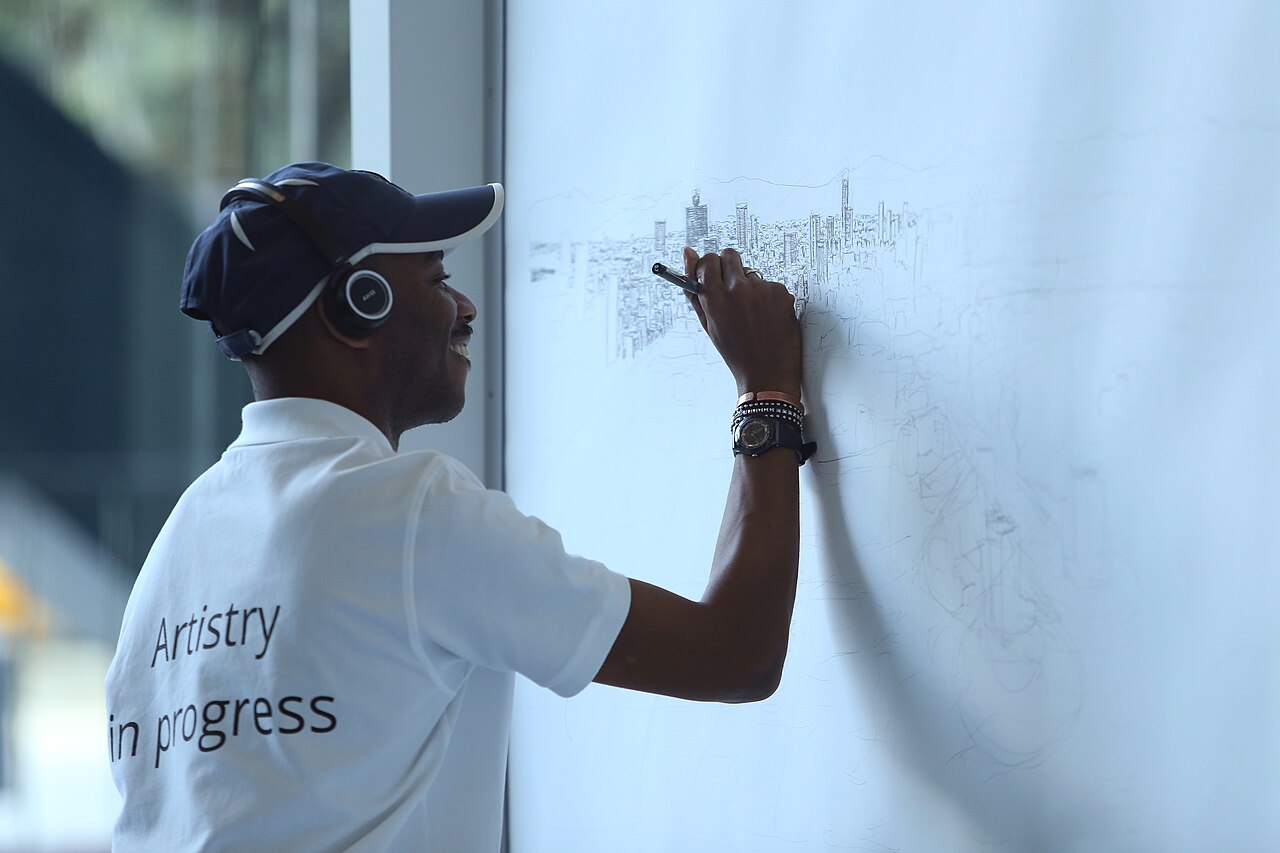

Nonverbal until age 4, now a professor and a world reference on autism: the extraordinary journey of Temple Grandin.
A Childhood Without Words, a Diagnosis That Came Much Later
Mary Temple Grandin was born on August 29, 1947, in Boston. At age 2, doctors at the time spoke of "brain damage" — the vocabulary available in 1949 to describe what would later be called autism. She didn't speak her first words until around age 3 or 4. A little-known fact: Temple Grandin wasn't formally diagnosed with autism until adulthood — not in childhood, contrary to what one might assume today.
Her mother, Eustacia, refused the solution doctors commonly recommended at the time: institutional placement. She chose intensive speech therapy and adapted private schools instead. As a teenager, Temple was mocked and left out — she found refuge in groups built around a shared interest (horses, model rockets, electronics) and developed a deep connection with animals, which she found far easier to read than human interaction.
The "Hug Machine": An Invention Born From Her Own Anxiety
A high school science teacher, William Carlock — a former NASA employee — spotted her potential and became a defining mentor. It was during this period that Temple observed cattle held in a squeeze chute before a vaccination, and noticed that the pressure seemed to calm them.
From that observation came a personal invention: a "hug machine" (squeeze machine), a device that applies enveloping pressure to the body to ease anxiety and sensory overload. Originally built for herself, the machine was later adapted to help other autistic people manage their own anxiety.
From Cattle Ranches to University Classrooms
Temple Grandin earned a bachelor's degree in psychology from Franklin Pierce College (1970), a master's in animal science from Arizona State University (1975), and a PhD in animal science from the University of Illinois (1989). Since 1990, she has been a professor of animal science at Colorado State University.
Her specialty: designing restraint systems for cattle that reduce their stress and fear before slaughter. The connection she herself draws between the two sides of her life is direct: her ability to "think in pictures" lets her visualize, with almost mechanical precision, what an animal perceives and feels facing a chute, a doorway, or a shadow — a level of sensory detail she explicitly links to her own way of perceiving the world.
Today, nearly half of all cattle handled in North America move through systems she designed or inspired.
"A Search Engine for Images": How She Describes Her Own Mind
Her first book, Emergence: Labeled Autistic (1986), tells her story in the first person. Thinking in Pictures (1996) and The Autistic Brain followed, laying out a theory that has become a reference point in the autism field: there are, she argues, three broad types of thinking — photo-realistic visual thinkers (like herself), pattern and math thinkers, and verbal-logic thinkers.
To describe her own visual thinking, she uses an image that has since been widely repeated: her mind, she says, works like a search engine for images — each word triggers not an abstract concept but a precise, vivid mental picture she can manipulate like an actual visual memory.
The pattern thinker she describes finds a striking echo in another autism figure already featured on this blog: Daniel Tammet, who is able to perceive numbers as shapes and colors.
She sums up the breadth of the autism spectrum in a now-famous line: it runs, she says, "from Einstein to a person who remains nonverbal and has an intellectual disability" — a reminder that autism can never be reduced to a single profile.
Her Critique of School: Don't Hold Back the "Geeks"
Temple Grandin has built a consistent, well-argued critique of the traditional school system. In her view, mainstream schooling tends to push out "smart, geeky kids" who struggle with social cues or standard testing formats, even though they often possess exceptional technical or spatial skills.
Her message to teachers and parents: rather than demanding uniform success across every subject, these students should be allowed to fully advance in their area of strength — with targeted support elsewhere if needed — instead of holding back their potential in the name of a standard that was never built for them.
An HBO Film, Seven Emmy Awards
In 2010, HBO aired Temple Grandin, a biographical TV movie starring Claire Danes in the title role. The film received 15 Emmy nominations and won seven, including Outstanding Made for Television Movie and Outstanding Lead Actress for Claire Danes — along with a Golden Globe and a Peabody Award.
"The World Needs All Kinds of Minds"
That's the title of her best-known TED talk, The World Needs All Kinds of Minds, watched nearly 5 million times. Her core message: visual thinkers, pattern thinkers, and verbal thinkers aren't in competition with one another — they're complementary. It's precisely their collaboration, not the dominance of any single way of thinking, that drives the biggest technical and scientific breakthroughs.
"The World Needs All Kinds of Minds," her most-watched TED talk.
Temple Grandin was inducted into the American Academy of Arts and Sciences in 2016 — one of the country's most prestigious academic honors.
Frequently Asked Questions
No — at age 2, doctors described her condition as "brain damage," the vocabulary of the time. She wasn't formally diagnosed with autism until adulthood.
It's the title of her most famous TED talk — her message is that visual, pattern, and verbal thinkers are complementary, and that it's their collaboration that drives the biggest breakthroughs.
She has been a professor of animal science at Colorado State University since 1990.
From a child without words to one of the most listened-to voices in the world on autism — proof that a late diagnosis never rules out an extraordinary path.
Further Reading
If you'd like to learn more about Temple Grandin, here are a few reliable resources:
- Her official website — news, upcoming talks, and her full body of publications
- Her TED speaker page — all of her talks, including "The World Needs All Kinds of Minds"
- Her Wikipedia entry — a full timeline of her academic and scientific career
- The HBO film's entry — full cast, production details, and a complete list of awards
Temple Grandin's story is a reminder that a diagnosis is never a limit set in stone — it's a key to understanding yourself, one that everyone can turn into something different, in their own way.
Sources: Britannica; Colorado Encyclopedia; TED, "The World Needs All Kinds of Minds"; Wikipedia, "Temple Grandin (film)"; Colorado State University press releases (2010); templegrandin.com.
— ◆ —
Every donation matters
Your support helps the association continue its work with autistic people and their families.
Support UsYou May Also Like

Autism in adults: what changes?
The inclusion of autistic people in the job market involves understanding the challenges associated with employment and valuing their specific skills. This article highlights both the common obstacles encountered in the job search and the inspiring success stories, showing that with appropriate adjustments and better awareness, the employment of autistic people can be a reality beneficial for everyone.
Stay in Damville
The project presented in Damville offers a real springboard towards a more autonomous life for autistic people, by providing structured support, adapted activities and personalised guidance. This initiative aims to foster inclusion, the development of skills and the fulfilment of the participants in a caring environment respectful of their needs.
Ailleurs en France : l'autisme en Île-de-France
Premier article d'une nouvelle série : après avoir comparé l'accompagnement de l'autisme entre pays, on tourne maintenant le regard vers l'intérieur — région par région, en commençant par l'Île-de-France, le territoire historique du Silence des Justes. Contrairement à la série internationale, la loi est ici rigoureusement identique partout en France. Ce qui change, en revanche, c'est le temps qu'il faut pour qu'elle s'applique concrètement — et cet écart peut déjà se creuser entre deux départements voisins de la même région.