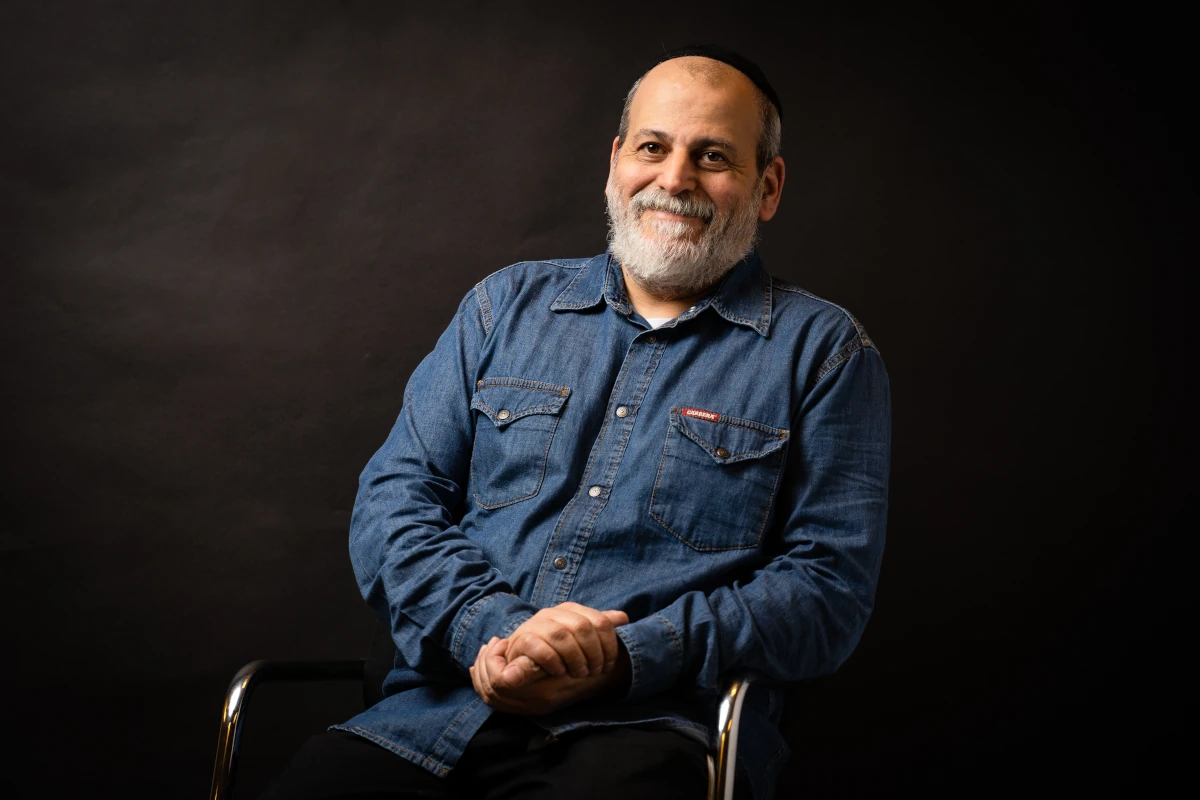
Thirty years ago, Stéphane Benhamou founded Le Silence des Justes. His vision for the future: AI, international outreach, new projects to fund.
2024: A Year on the Ground, Told Without Filter
In a previous interview, Stéphane Benhamou had already outlined an association in full growth — 770 employees at the time, 265 people supported, 85% of whom received full-time care, 365 days a year. An intensity of support he justified without hesitation: the severity of autism among most of those cared for rules out staying at home, a SESSAD placement, or a day hospital. A year on, those figures have already changed: the association today mobilizes 900 professionals and supports 450 families every day — a pace of growth that speaks for itself.
Asked about the reasons behind this success, he credited it above all to the teams: an organization built on listening, where an idea can come from an intern just as easily as from a doctor. As an example, he cited a robot programming project run with the Hauts-de-Seine département, which has become, in his words, a weekly highlight the young people are "absolutely unwilling to miss."
He didn't shy away from ongoing challenges either: covering staff during holiday periods, growing harder as the association expands; a dedicated BAFA training module for welcoming children with ASD, still to be created; and rising needs for facilities, training, and support for families and siblings.
On relations with the authorities, he summed up his outlook in a single line: isolation is the real common enemy, and working together always makes it possible to find solutions.
A year later, as the association's 30th anniversary approached, the conversation shifted register — less a year-in-review, more a look back across three decades, and forward toward what comes next. We reproduce it here in full.
"Thirty Years of Proof From the Field"
Le Silence des Justes will celebrate its 30th anniversary in 2026. Stéphane Benhamou, its founder, looks back at how far the association has come — and what remains to be done.
Q Since it was founded, what have been the key moments for the association?
We've been through several major turning points. The association was founded in 1996, in partnership with the day hospitals of Antony and Santos-Dumont. For a long time, we moved forward without any real institutional recognition: our first official approval didn't come until 2007.
We then had to adapt to major shifts in public policy, like the turning point in 2008, when the State stopped creating new facilities, or the transformation of health services into Regional Health Agencies. The first national autism plans brought funding, but often to programs that weren't working properly.
From 2010 onward, we faced a massive influx of emergency situations. Then, in 2019, the film Hors Normes (The Specials) marked a turning point: it exposed the system's failures and forced public authorities to respond, including a national funding package of 90 million euros.
Today, I see a positive shift: public policy is becoming more professional and starting to produce responses better suited to real needs. At the same time, France has made great progress in medical research. Exchanges between child psychiatrists and researchers have allowed us to develop tailored support, and to refine our practices considerably.
Q What legacy are you leaving families after 30 years of action?
My conviction is that the situation for autistic people, their families, and professionals has improved. We were in the dark; today, we're in the light. In concrete terms, that means lives are now respected.
Our strength lies in having built an organization based on listening, where anyone can contribute regardless of their role: an idea can come from an intern just as much as from a doctor. We've learned continuously alongside researchers, care and medico-social professionals, and autistic people themselves, along with their loved ones and support workers. That partnership is the source of everything we've built.
"I'm proud of the fight we've led to get field expertise recognized. We've always refused to let decisions be made without the people concerned. Our method is simple: we bring proof from the field. We show, through experience and results, what actually works for autistic people.
All of this exists because of the professionals at Le Silence des Justes. Their commitment and their daily standards, for thirty years now, are what allow us to keep moving forward."
Q How would you sum up 2025?
2025 was an intense year, marked by several concrete steps forward. We strengthened our capacity, creating new places across every age group. In particular, we expanded support for very young children, going from 1 to 8 children welcomed from the age of two and a half, with the necessary teams in place.
We also responded to numerous emergency situations, while expanding our activities: cultural trips, discovery stays, inclusive holidays. Workplace inclusion is progressing too. More and more business owners are opening their doors, and we're improving our support to make those pathways more secure.
Finally, our growth requires us to become more structured. Our headcount keeps rising, which means our organization has to keep evolving too, particularly around management functions and human resources.
Q What are your major projects for the years ahead?
Our first priority is to keep creating places while maintaining a high standard of quality. Quantity and quality can't be separated.
We're also working on creating a national platform for at-home support and caregiver assistance. Our goal is to pass on our expertise in emergency intervention by training students, educators, and caregivers across the country. That's how so-called "complex" situations get prevented in the first place.
We're also looking into integrating artificial intelligence — not to replace people, but to develop new communication tools and improve how we're organized. AI will never do the work for us: it depends entirely on what we put into it.
Lastly, we're continuing our international work. After Cameroon and Morocco, we'll be organizing the next Autism Expo in Africa, in Senegal, in 2027. We share our expertise there, while also learning from local practices. Autism is a universal reality.
Q In thirty years, what will life look like for an autistic person in France?
If we keep supporting people appropriately, both in numbers and in quality, needs will decrease. Today, we know how. That wasn't the case thirty years ago.
If we keep up our efforts, without ever letting our guard down, we'll move toward a calmer, more inclusive society — from school all the way to the workplace.
Q How will you be celebrating this 30th anniversary?
We want to mark this anniversary with moments that are both unifying and meaningful: a comedy show, a culinary event at La Table des Justes, and above all, a fundraising campaign.
Our goal is clear: raise funds to support innovative projects that aren't funded by public authorities. The ideas exist, the needs are there. What we still need, as always, are the means to act.
Thirty years after a first encounter at a summer camp, the conviction remains the same: no situation should go unanswered.
Interviews with Stéphane Benhamou, founder and director general of Le Silence des Justes, conducted in 2024 and 2025.
— ◆ —
Every donation matters
Your support helps the association continue its work with autistic people and their families.
Support UsYou May Also Like
Understanding autism: a guide for new parents
This guide offers a clear and caring introduction to autism for new parents, explaining the characteristics of the autism spectrum, the signs to look for and the first steps to take in supporting their child. It offers important markers to better understand specific needs, foster harmonious development and approach daily life with confidence and serenity.

Autisme et scolarisation en France : les chiffres de la rentrée
Chaque rentrée de septembre, la même question revient pour des dizaines de milliers de familles : mon enfant autiste aura-t-il une place, un accompagnement, une scolarité qui lui convient vraiment ? Derrière cette question individuelle se cache une réalité nationale faite de progrès réels et de tensions persistantes. Voici ce que disent les chiffres.
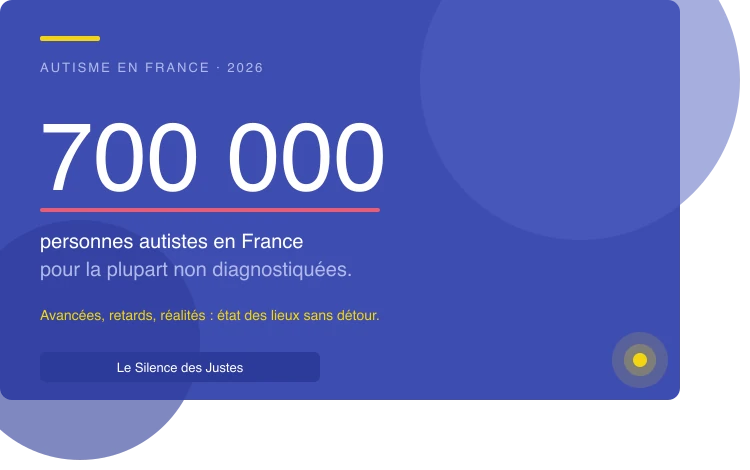
Autism in France in 2026: A Candid Assessment
Scientific progress, institutional delays, and fragile inclusion: where does France really stand in its management of autism?