De 0,8% à 4,1% de prévalence selon la province, 5 ans d'attente en Ontario : comment le Canada accompagne l'autisme, de l'enfance à l'âge adulte.
De 0,8% à 4,1% selon la province : une variation qui rappelle les États-Unis
En 2024, le Canada a publié sa toute première Stratégie nationale sur l'autisme — une première historique pour le pays. Selon l'Agence de la santé publique du Canada (ASPC), la prévalence nationale atteint 2,0% (soit 1 enfant sur 50) chez les 1 à 17 ans. (ASPC, 2022)
Mais ce chiffre national masque un écart considérable : de 0,8% en Saskatchewan à 4,1% au Nouveau-Brunswick — un rapport de 1 à 5 entre provinces, qui reflète très probablement des différences de dépistage et de méthodologie plutôt qu'une vraie différence de fréquence. Autre limite reconnue par l'ASPC elle-même : ses données excluent les enfants vivant dans des réserves des Premières Nations et ceux placés en famille d'accueil ou en institution — une zone d'ombre statistique qui touche justement les populations les plus vulnérables.
L'enfance et l'adolescence : la crise ontarienne, un cas d'école
Au Canada, la santé et l'éducation relèvent des provinces, pas du fédéral — chacune organise son propre système de soutien à l'autisme, avec des résultats très inégaux. L'Ontario, la province la plus peuplée, illustre le problème de façon particulièrement nette avec son Programme ontarien des services en matière d'autisme (OAP).
Selon des données obtenues par accès à l'information (mars 2026), 89 799 enfants sont inscrits au programme — mais 69 166 d'entre eux, soit 77%, n'ont accès à aucun financement de base et restent sur liste d'attente. (End The Wait Ontario, données FOI, mars 2026) Le délai d'attente pour les services cliniques de base dépasse désormais 5 ans — les familles qui reçoivent une invitation aujourd'hui s'étaient inscrites en 2020 ou avant.
Ce délai dépasse largement la fenêtre d'intervention précoce recommandée par les spécialistes du développement — un enfant inscrit à 3 ans peut ainsi n'être pris en charge qu'à l'entrée au collège.
L'âge adulte : un écart d'emploi qui persiste, une nouvelle prestation fédérale
Tous handicaps confondus, 62% des adultes en âge de travailler en situation de handicap ont un emploi au Canada, contre 78% pour les personnes sans handicap — un écart de 16 points, stable depuis plusieurs années. (Stratégie pour l'emploi des personnes handicapées, 2024-2025) Pour l'autisme spécifiquement, une enquête de 2012 trouvait un taux nettement plus bas : seulement 14% des adultes autistes en emploi, contre 93% dans la population générale — un chiffre ancien, mais qui donne la mesure de l'ampleur du défi propre à l'autisme, au-delà du handicap en général.
Chaque province expérimente ses propres réponses : programme EmployABILITY dans les Territoires du Nord-Ouest, Move to Work en Nouvelle-Écosse, formation pré-emploi ancrée dans la culture inuite au Nunavut, ou encore Project SEARCH à l'Île-du-Prince-Édouard — un programme de transition école-travail de 10 mois spécifiquement pensé pour les personnes autistes ou avec déficience intellectuelle.
Nouveauté fédérale : la Prestation canadienne pour les personnes handicapées, versée depuis juillet 2025, offre jusqu'à 200$ par mois aux personnes de 18 à 64 ans disposant du Crédit d'impôt pour personnes handicapées et à revenu modeste — un premier geste financier direct, mais d'un montant volontairement modeste.
Ce qui distingue vraiment le Canada de la France
Le Canada partage avec les États-Unis cette même fragmentation provinciale/étatique qui produit des écarts de prévalence et de service considérables selon l'endroit où l'on vit. Mais contrairement aux États-Unis, le Canada conserve un système de santé universel — la variable de l'assurance de l'employeur, centrale dans l'histoire américaine, n'existe pas ici.
La France, elle, garde un pilotage plus centralisé (MDPH, AESH, PPS uniformes sur tout le territoire) — même si les délais et les disparités départementales existent aussi. Le Canada se situe donc à mi-chemin : universel comme la France côté santé, mais fragmenté comme les États-Unis côté mise en œuvre concrète.
Questions fréquentes
Très probablement en raison de différences de dépistage et de méthodologie de collecte entre provinces, plutôt qu'une vraie différence de fréquence de l'autisme.
Le délai pour les services cliniques de base dépasse désormais 5 ans, selon des données obtenues par accès à l'information en 2026.
Une nouvelle prestation fédérale, versée depuis juillet 2025, offrant jusqu'à 200$ par mois aux personnes de 18 à 64 ans à revenu modeste disposant du Crédit d'impôt pour personnes handicapées.
Un système de santé universel ne suffit pas à garantir un accès uniforme — la géographie continue de peser lourd, même dans un pays qui a fait de l'égalité d'accès aux soins un principe fondateur.
Cette série "Ailleurs dans le monde" nous rappelle qu'aucun pays n'a encore résolu la question de l'autisme à tout âge — chacun avance avec ses propres forces et ses propres angles morts.
Sources : Agence de la santé publique du Canada, Stratégie nationale sur l'autisme (2024) et enquête 2019 ; Office de la responsabilité financière de l'Ontario, budget provincial 2026, et enquête FOI de CBC News (données relayées par End The Wait Ontario, mars 2026) ; Statistique Canada, marché du travail des personnes handicapées (2024) ; Emploi et Développement social Canada, Stratégie pour l'emploi des personnes handicapées (2024-2025) ; Disability Credit Canada.
— ◆ —
Chaque don compte
Votre soutien permet à l'association de poursuivre son accompagnement auprès des personnes autistes et de leurs familles.
Nous SoutenirVous aimerez aussi

Temple Grandin : la femme qui a changé le regard sur l'autisme
Elle n'a pas parlé avant l'âge de 3 ou 4 ans. Aujourd'hui, elle est l'une des voix les plus écoutées au monde sur l'autisme — professeure d'université, autrice de plusieurs livres devenus des références, et sujet d'un film qui a remporté sept Emmy Awards. Voici comment Temple Grandin est devenue Temple Grandin.

Comment aider votre enfant autiste à faire face à l’anxiété
Aider un enfant autiste à faire face à l’anxiété nécessite une compréhension de ses signaux émotionnels et la mise en place de stratégies adaptées comme des routines apaisantes, des techniques de respiration ou des supports visuels. Cet article présente des conseils concrets pour accompagner l’enfant dans la gestion de son stress et favoriser un quotidien plus serein.
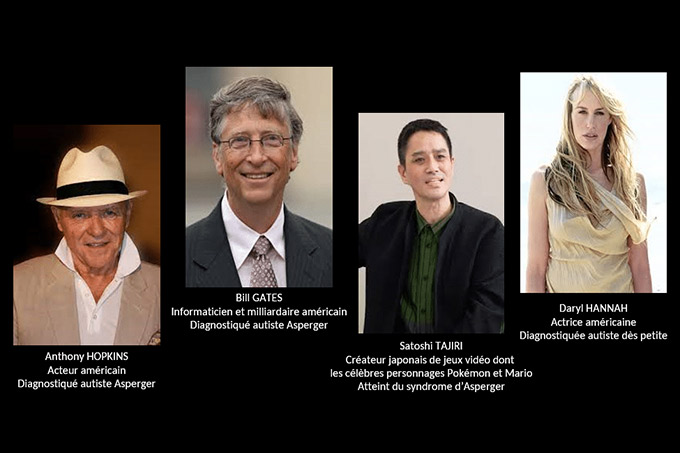
Le parcours de personnes autistes célèbres
Le parcours de personnes autistes célèbres met en lumière des trajectoires inspirantes qui montrent la diversité des talents et des réussites au sein du spectre autistique. En découvrant ces témoignages, on valorise les compétences uniques de personnes autistes et on encourage une meilleure compréhension et reconnaissance de leurs contributions dans la société.