
Découvrez la vérité sur l'autisme, démystifiant les mythes courants. Un regard éclairé sur une condition complexe.
Cet article démystifie les idées fausses sur l'autisme. Il aborde de manière informative et informelle des mythes courants, offrant au lecteur des détails uniques qui n'ont pas encore été explorés.
Mythe 1 : Les personnes autistes manquent d'empathie
Les personnes autistes sont souvent injustement stigmatisées comme étant dépourvues d'empathie. Cependant, il est important de souligner que les capacités d'empathie peuvent varier d'une personne à l'autre, indépendamment de leur condition autistique. Il est donc incorrect de généraliser cette caractéristique à toutes les personnes autistes.
Les différences dans la manière dont les individus autistes expriment et perçoivent l'empathie peuvent être attribuées aux particularités de leur fonctionnement cérébral. Certaines recherches suggèrent que les personnes autistes peuvent ressentir une empathie plus forte pour certaines situations ou formes spécifiques d'expression émotionnelle.
Il est également important de noter que toutes les personnes, qu'elles soient autistes ou non, ont des niveaux variables d'empathie. Cela signifie qu'il n'est pas correct de présumer que toutes les personnes neurotypiques sont automatiquement plus empathiques que celles qui sont autistes.
En réalité, la diversité et la complexité des expériences humaines ne peuvent pas être réduites à un simple stéréotype selon lequel les personnes autistes manquent d'empathie. Il est essentiel de reconnaître et de respecter le spectre complet des expériences et des émotions humaines, que l'on soit diagnostiqué autiste ou non.
Mythe 2 : Les personnes autistes sont toutes des génies
Les personnes autistes ne sont pas toutes des génies, contrairement à un mythe courant. Bien que certaines personnes autistes puissent avoir des capacités exceptionnelles dans certains domaines, cela ne signifie pas qu'elles sont tous des génies dans tous les aspects de la vie.
Il est vrai que certaines personnes autistes peuvent avoir des compétences spéciales, comme une mémoire remarquable ou une capacité à se concentrer sur des tâches spécifiques. Cependant, ces talents sont propres à chaque individu et ne peuvent pas être généralisés à l'ensemble de la population autiste.
Il est important de reconnaître que l'autisme est un spectre, ce qui signifie que chaque personne autiste est unique avec ses propres forces et faiblesses. Il serait injuste et inexact de supposer que toutes les personnes autistes ont un potentiel de génie.
Au lieu de porter des jugements basés sur des stéréotypes, il est essentiel de reconnaître et de respecter les différences individuelles de chaque personne autiste. En ne mettant pas tout le monde dans le même panier, nous pouvons mieux comprendre et soutenir les besoins spécifiques des personnes atteintes d'autisme.
Mythe 3 : L'autisme est causé par la vaccination
Les allégations selon lesquelles la vaccination cause l'autisme sont largement réfutées par la communauté médicale et scientifique. Des études approfondies ont été réalisées pour examiner tout lien possible entre les vaccins et l'autisme, mais aucune preuve solide n'a été trouvée pour soutenir cette idée.
La recherche montre que l'autisme est un trouble neuro-développemental complexe ayant des origines à la fois génétiques et environnementales. Il n'existe aucune relation directe entre la vaccination et le développement de l'autisme.
Il est important de souligner que les avantages des vaccins sont bien plus importants que les éventuels risques. Les vaccins protègent contre des maladies potentiellement graves, voire mortelles, qui peuvent être évitées grâce à une immunisation appropriée. Le fait de ne pas se faire vacciner expose non seulement l'individu lui-même à ces maladies, mais aussi d'autres personnes vulnérables qui ne peuvent pas se faire vacciner.
Les fausses croyances sur le lien entre la vaccination et l'autisme ont entraîné une baisse de la couverture vaccinale dans certains groupes de population, ce qui augmente le risque de résurgence de maladies évitables par la vaccination.
Mythe 4 : Les personnes autistes ne peuvent pas développer de relations sociales
Il y a souvent des idées fausses sur l'autisme. Un de ces mythes est que les personnes autistes ne peuvent pas avoir de relations sociales. Cependant, il est important de déboulonner cette croyance erronée. Les personnes autistes sont capables de construire des liens sociaux satisfaisants et significatifs avec les autres.
Bien que les personnes autistes puissent rencontrer des difficultés dans les interactions et la communication sociale, cela ne signifie pas qu'elles sont incapables d'établir des relations sociales. Elles ont simplement besoin d'une approche spécifique adaptée à leurs besoins particuliers. Par exemple, elles peuvent préférer des interactions plus structurées ou avoir besoin de plus de temps pour traiter les informations sociales.
De plus, il est important de comprendre que la façon dont les personnes autistes expriment leur affection peut être différente de ce qui est considéré comme normal selon les normes sociales. Il est donc essentiel d'être sensible et compréhensif envers les différentes façons dont les personnes autistes interagissent avec les autres.
En fin de compte, il y a un large éventail de capacités dans les relations sociales parmi les personnes autistes. Il est crucial de ne pas généraliser ou stéréotyper cette population en se basant sur le mythe selon lequel elles ne peuvent pas développer de relations sociales.
Conclusion
Dans l'ensemble, de nombreux mythes courants sur l'autisme ont été réfutés. Les explications précédentes ont clairement démontré que ces idées fausses ne reposent pas sur des faits scientifiques et peuvent nuire aux personnes autistes. Il est donc essentiel de se débarrasser de ces idées préconçues afin de favoriser une meilleure compréhension et une acceptation plus large de l'autisme.
Un aspect important à souligner est la diversité au sein du spectre autistique. Les individus autistes peuvent présenter une grande variété de caractéristiques et d'expériences, allant d'une sensibilité sensorielle accrue à des talents exceptionnels dans certains domaines. Il est crucial de reconnaître cette diversité et d'éviter les généralisations simplistes qui ne correspondent pas à la réalité complexe de l'autisme.
Il est également important de noter que les personnes autistes peuvent mener une vie épanouissante et réussie avec les bons soutiens et adaptations. L'autisme ne doit pas être perçu comme un obstacle insurmontable, mais plutôt comme une différence naturelle qui peut être valorisée et célébrée. En créant un environnement inclusif et favorable, nous pouvons permettre aux individus autistes de s'épanouir pleinement.
En conclusion, il est essentiel de démystifier les idées fausses sur l'autisme afin de construire une société plus inclusive pour tous. Au lieu de nous concentrer sur les stéréotypes préjudiciables, nous devrions chercher à comprendre la diversité du spectre autistique et à promouvoir une véritable acceptation et appréciation de chaque individu unique. Faisons preuve d'empathie, de respect et de sensibilité envers les personnes autistes afin qu'elles puissent s'épanouir et contribuer pleinement à notre société.
Chaque don compte
Votre soutien permet à l'association de poursuivre son accompagnement auprès des personnes autistes et de leurs familles.
Nous SoutenirVous aimerez aussi
Entretien radio : Journée mondiale de l’autisme
À l’occasion de la Journée mondiale de sensibilisation à l’autisme, Stéphane Benhamou s’exprime au micro d’Ilana Ferhadian pour partager des réflexions et des messages clés sur la compréhension, l’inclusion et le soutien aux personnes autistes. Cet entretien met en lumière l’importance de sensibiliser le grand public et de valoriser les parcours de vie des personnes sur le spectre autistique.
Les bénéfices de l’inclusion sociale
L’inclusion sociale offre de nombreux bénéfices pour les personnes autistes, notamment en favorisant leur confiance en soi, leurs interactions et leur participation active à la vie communautaire. En valorisant l’acceptation, la compréhension et l’adaptation des environnements, on permet à chacun de s’épanouir pleinement dans la société.
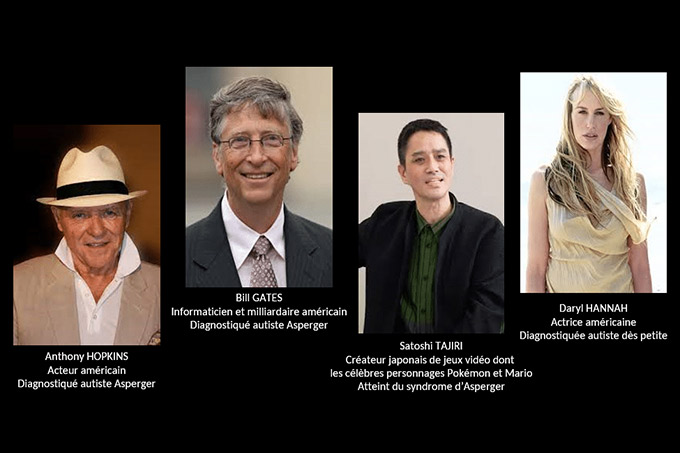
Le parcours de personnes autistes célèbres
Le parcours de personnes autistes célèbres met en lumière des trajectoires inspirantes qui montrent la diversité des talents et des réussites au sein du spectre autistique. En découvrant ces témoignages, on valorise les compétences uniques de personnes autistes et on encourage une meilleure compréhension et reconnaissance de leurs contributions dans la société.